Crowd Dynamics Modeling
1. Agent-based pedestrian simulation in subway station
This video shows simulation and changes the parameters dynamically. You can also simulate our model online with Anylogic Cloud.
2. Physics-informed graph neural ordinary differential equations (PI-NeuGODE)
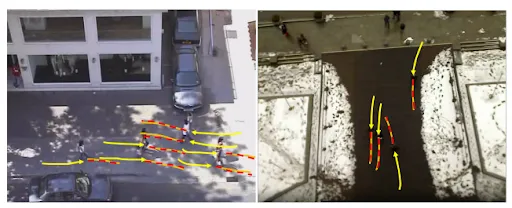
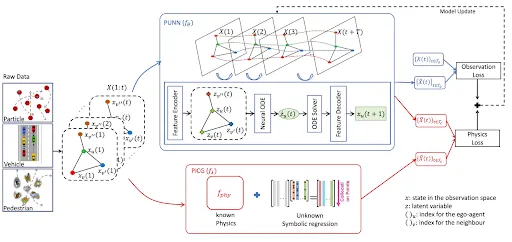
We tackled the challenge of predicting the spatiotemporal trajectories of individuals in complex social dynamics like driving and crowding. We introduced "PI-NeuGODE," a framework that combined neural ordinary differential equations (neural ODEs) with physics-informed deep learning (PIDL) and symbolic regression. By integrating physics models and using graph neural networks to learn topological interactions, the framework enhanced prediction accuracy and efficiency. Tested in human driving, platooning, and crowding scenarios, PI-NeuGODE demonstrated superior performance over existing models, providing valuable insights for the project.
3. Cross-and Context-Aware Attention Based Spatial-Temporal Graph Convolutional Networks for Human Mobility Prediction
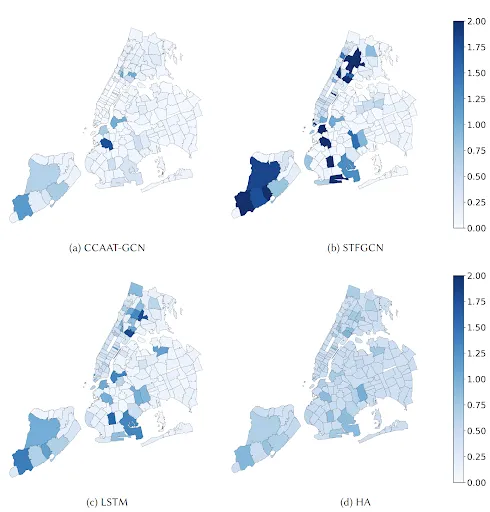
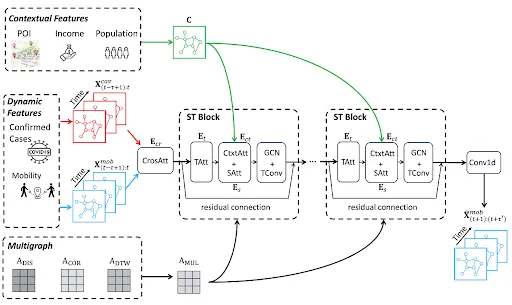
We addressed the transformation of human mobility patterns due to the COVID-19 pandemic, predicting visits to various locations in New York City using COVID and mobility data from the past two years. We developed the CCAAT-GCN model (Cross- and Context-Attention based Spatial-Temporal Graph Convolutional Networks) to model COVID-19's impact on mobility patterns. Validated with SafeGraph data from August 2020 to April 2022, our model outperformed baselines. The attention matrix aligned with COVID-19 case rates and points of interest, capturing the relationship between the pandemic and mobility patterns. These findings offer insights for predicting mobility during future disruptive events, aiding emergency preparedness for planners and policymakers.
4. Information-Maximizing Spatial-Temporal Graph Convolutional Attention Network for Heterogeneous Human Trajectory Prediction
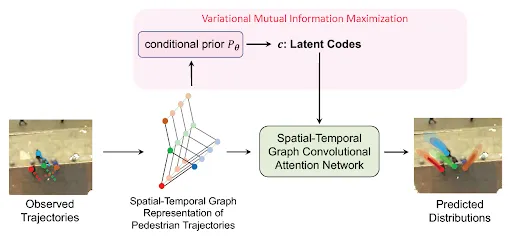
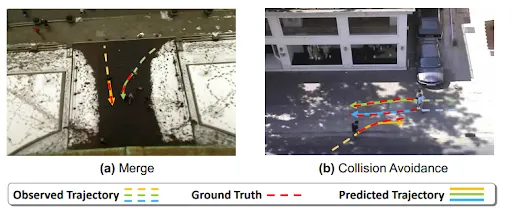
We focused on predicting the future trajectories of interacting pedestrians, crucial for fields like autonomous driving and human-robot interaction. We developed the InfoSTGCAN model, which integrates spatial-temporal graph convolution and attention to capture interactions and predict individual behavior. The model uses latent codes and historical trajectories to forecast future movements with a bi-variate Gaussian distribution. Extensive experiments showed InfoSTGCAN outperforms baselines in Average Displacement Error and Final Displacement Error, with visualizations highlighting its effectiveness in various scenarios.
5. Understand the Public Attitude Toward Crimes in the Subway System Using Social Media Data
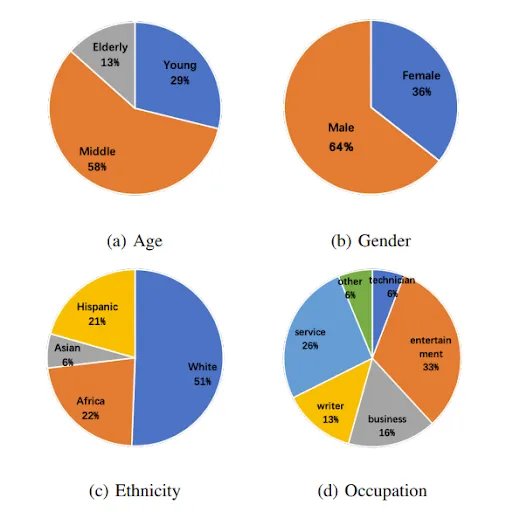
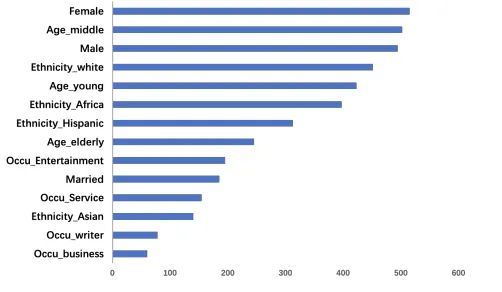
We also analyzed public attitudes toward New York City subway crimes using tweets from the past two years. Sentiment analysis and demographic data revealed that age, gender, and ethnicity influence concerns about subway safety, with women particularly worried. Negative sentiments linked to subway crimes indicate public fear and potential decreases in ridership. These findings can help transit planners and policymakers create safer environments to boost post-pandemic transit usage.